Every few months a film, a sitcom or a social-media clip shows a fire alarm sounding and every sprinkler in the building opening at once. People then bring that picture to a tenancy meeting, a body-corporate AGM or a warehouse handover and treat it as a design fact. It is not. Australian sprinkler systems are heat-operated, head by head. The myths around them are old, and they still delay decent protection in offices, shops, apartments and sheds.
This piece is a correction, not a brochure. It sits in the commercial and industrial hub because that is where most of the arguments happen, but the same physics apply in a house. If you want the residential version of the “do I need them” question, that is a separate guide. What follows is the set of claims the desk still hears from otherwise sensible building owners.
Do all fire sprinklers go off at once?
No. A standard spray, pendant, sidewall or concealed head is a closed valve held shut by a glass bulb or a fusible link. The bulb is filled with a liquid that expands when heated; at the rated temperature the glass breaks, the plug falls away, and water discharges from that head. Neighbouring heads stay shut until the air at their bulbs is hot enough. In a typical office, shop or apartment fire, one head operates. Sometimes two or three. A warehouse fire can open more, because the fire is larger and the ceiling is higher, but it is still a heat map, not a building-wide instruction.
The movie version — alarm sounds, every head opens — would require a different system. Deluge systems use open nozzles and a detection-operated valve so that a whole area wets at once. They are for special hazards such as oil-filled transformers and some process structures, explained with the other types in wet, dry, pre-action and deluge. They are not what is above a supermarket aisle or a hotel bed.
Waterflow alarms, bells and brigade signals start when water moves in the pipe. That can look, to an occupant, as if “the sprinklers went off everywhere,” because the alarm is building-wide. The water is not. If you are standing in a dry corridor listening to a gong, a head has opened somewhere else, or a contractor has opened a drain.
The design implication is the opposite of the myth. Because only the heated heads open, the water supply is calculated for a reasonable number of heads, not for every head on the floor. That is why hydraulic calculations talk about a design area, and why painting extra heads into a ceiling without a calculation is not free.
Can smoke set off sprinklers?
No. Smoke is not heat. A sprinkler bulb does not care about particles in the air. It cares about temperature. You can fill a room with toast smoke, theatrical fog or a smouldering waste-paper basket that has not yet produced a hot gas layer, and the heads will sit there. You can also have a fast, hot fire that opens a head before anyone has seen much smoke at head height.
This is why sprinklers and smoke alarms do different jobs. Smoke alarms (and occupant-warning systems in commercial buildings) buy time to get people out. Sprinklers put water on the fire that has become hot enough to threaten the room. A building that has only detectors will warn and then wait. A building that has only sprinklers may control a fire in an empty warehouse at 2 a.m. without waking anyone — which is fine for the steelwork, and not enough for sleeping occupants. The NCC keeps both ideas in play for a reason.
Detectors can be arranged to trip a deluge or a pre-action valve. That is a designed interface, using listed detection, not “smoke set off the sprinklers” as a general rule. In a pre-action records room, smoke detection may be what fills the pipe; a head still has to open before water leaves the ceiling. In an office wet system, smoke has no vote.
Do sprinklers cause more water damage than fire?
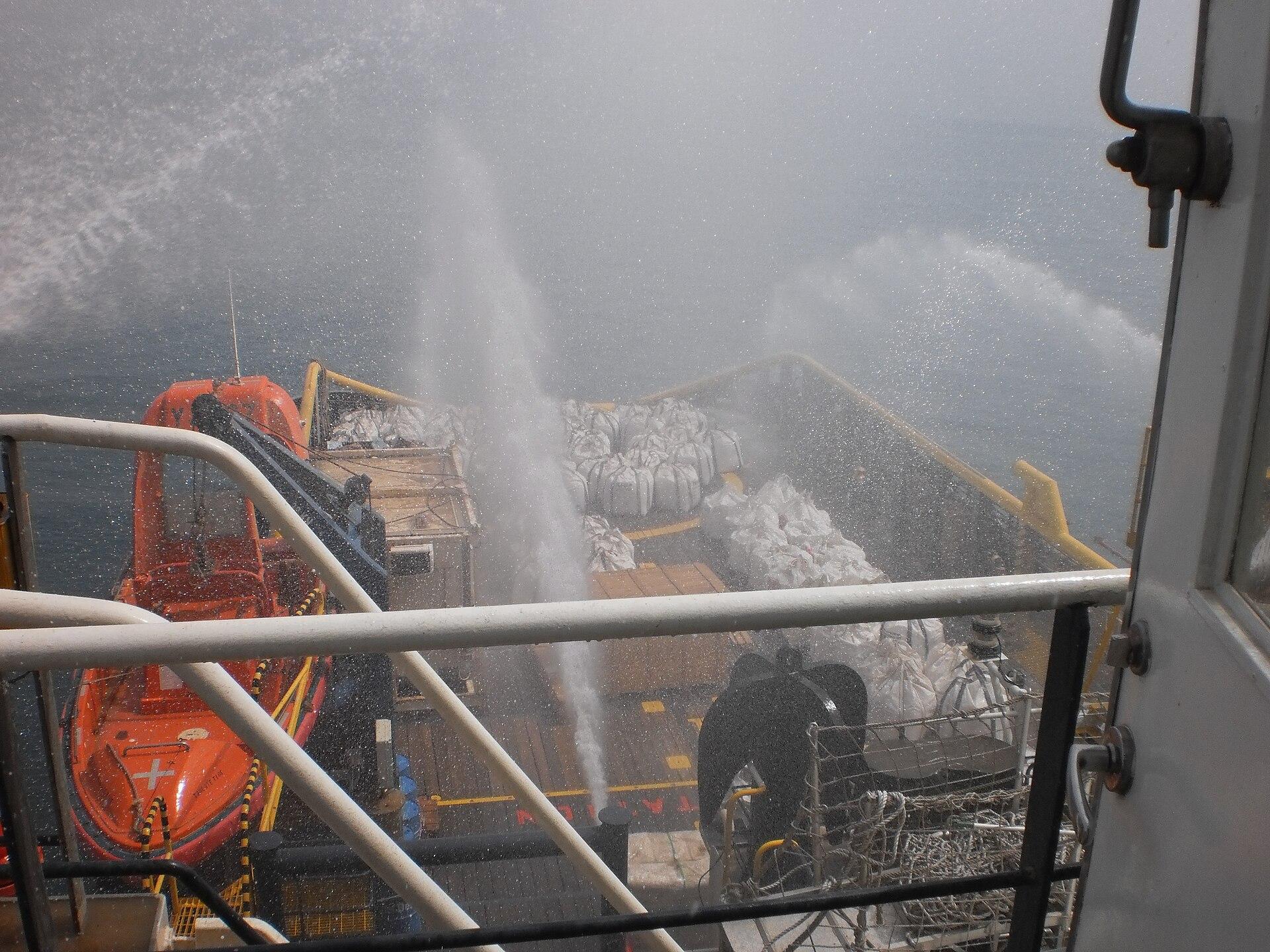
This is the myth that sounds like prudence. It is usually offered by someone looking at a photograph of a head in full spray — the image at the top of this page — and imagining that volume of water multiplied by every room. Two corrections.
First, as above, only the heads in the fire operate. A single standard pendant flowing for the ten or twenty minutes until the brigade shuts the valve is a lot of water in a workstation. It is not a floor. It is not the contents of a fire-brigade line directed into the same room after the fire has had time to involve the ceiling void, the next shop, and the plastic stock in the back.
Second, fire services in Australia and overseas have said the same thing, in public, for a long time: the water from automatic sprinklers is a fraction of the water, smoke and structural damage of an unsprinklered fire that the brigade then has to fight with hose lines. Early control means a smaller fire. A smaller fire means less water from everyone. Insurers who give sprinklered buildings better terms are not doing it because they enjoy wet carpet; they are doing it because the loss statistics run that way.
None of this makes a sprinkler operation a non-event. Stock will be wet. Ceilings will stain. Electronics will die. That is a loss. It is a different loss from a burnt-out compartment, a collapsed mezzanine, or a warehouse that cannot trade for six months. Owners who isolate a system “so we do not get water damage” have chosen the larger risk and given it a careful name.
They leak constantly, they are only for factories, they look industrial
Three smaller myths travel together.
They leak constantly. A wet-pipe system is closed. Water sits in the pipe, at pressure, behind every bulb, for years. Weeping at a fitting is a defect, the same as a weeping hydrant. It should be repaired. It is not the normal operating mode. Corrosion, poor workmanship, freeze-thaw in alpine plant, and mechanical knocks cause leaks. So does a forklift in a rack. The existence of maintenance under AS 1851 is an admission that systems need care, not an admission that they drip on purpose. Pre-action and dry systems exist precisely where an accidental wet-pipe leak would be intolerable, such as records rooms and freezers.
They are only for factories. Walk through an Australian CBD. Offices, hotels, hospitals, shopping centres, apartment towers, enclosed car parks and university buildings are sprinklered because the NCC triggered them or because a performance solution needed them. Factories and warehouses are one occupancy, treated in warehouse design. They are not the whole market. Houses are the occupancy that still mostly goes without, which is a Code fact, not a physics fact.
They look industrial. Exposed pendents in a warehouse are industrial, because that is the right head for that ceiling. Concealed and recessed heads exist for the rooms where a flush ceiling matters. Cover plates can be matched to the paint (using listed plates, not a spray can). Sidewall heads sit on a wall where the ceiling cannot take a pendant. Residential sprinklers are shaped for dwelling rooms. If a designer tells you the system has to look like a 1970s plant room, they are describing a head they like, not a requirement of AS 2118.
Accidental discharge is not a normal event
Heads operate without a fire. It happens. Forklifts, ladders, vandalism, freeze-ups, overheating from a process that needed a higher-temperature head, and the very rare mechanical failure of a bulb or a soldered link all exist. They are why spare heads are kept in a cabinet, and why isolation valves and restoration procedures matter.
They are not common in the way occupants mean when they say “these things go off all the time.” Fire services and industry briefings have, for years, used a talking point of the order of one accidental operation from mechanical failure in millions of heads per year. That is a talking point, not a promise about your building, and it excludes the forklift that took a head off a rack. Even allowing for mechanical damage, the rate is not “the ceiling rained twice last financial year.” If a building has repeated operations, something is wrong with the occupancy, the temperature rating, the protection of the heads, or the way isolations are done.
Deliberate misuse — people hanging signs from arms, painting bulbs, using the sprinkler pipe as an earth, isolating shops on Friday night — is not accidental discharge. It is management. The myths above make that management worse, because they give people a story in which the system is the hazard.
A sprinkler head is a heat-operated valve with a job. It does not listen to smoke. It does not take instructions from a movie. It does not wet a whole tower because one room is on fire. If you are being asked to approve, isolate or omit a system on the strength of those pictures, ask for the design basis instead. The commercial and industrial guides on this site are written for that conversation.