The National Construction Code does not require a fire sprinkler system in every Australian building. It requires one when a Deemed-to-Satisfy (DTS) trigger in Volume One is met, when a state variation adds a trigger, or when a performance solution relies on sprinklers.
This piece uses NCC 2022 language — the E1D4 family and Specification 17 — because that is the numbering most current drawings still quote. NCC 2019 used E1.5 and Specification E1.5. NCC 2025 moves numbers again in places. Read the edition your jurisdiction has adopted, including the state appendix. The stable part is height, storeys, care, and large fire compartments.
For design after the trigger, see AS 2118.1 fire sprinkler systems explained. For mid-rise residential options, see FPAA101D versus FPAA101H versus AS 2118.4. Both sit in standards and compliance.
When does the NCC require sprinklers?
Volume One (Class 2 to 9 buildings) puts fire-fighting equipment in Part E1. The sprinkler clauses in the 2022 edition are a cluster — E1D4 and its neighbours — rather than a single sentence. Specification 17 then says which standard the system must meet. Specification 18 adds the mid-rise Class 2 and 3 pathway.
The triggers designers actually argue about are these.
Effective height more than 25 metres. A building with any part more than 25 m in effective height is sprinkled throughout, with limited exceptions such as a stand-alone open-deck car park. Twenty-five metres is ladder and firefighting reach. A 26 m apartment tower and a 26 m office are both AS 2118.1 jobs in ordinary DTS practice.
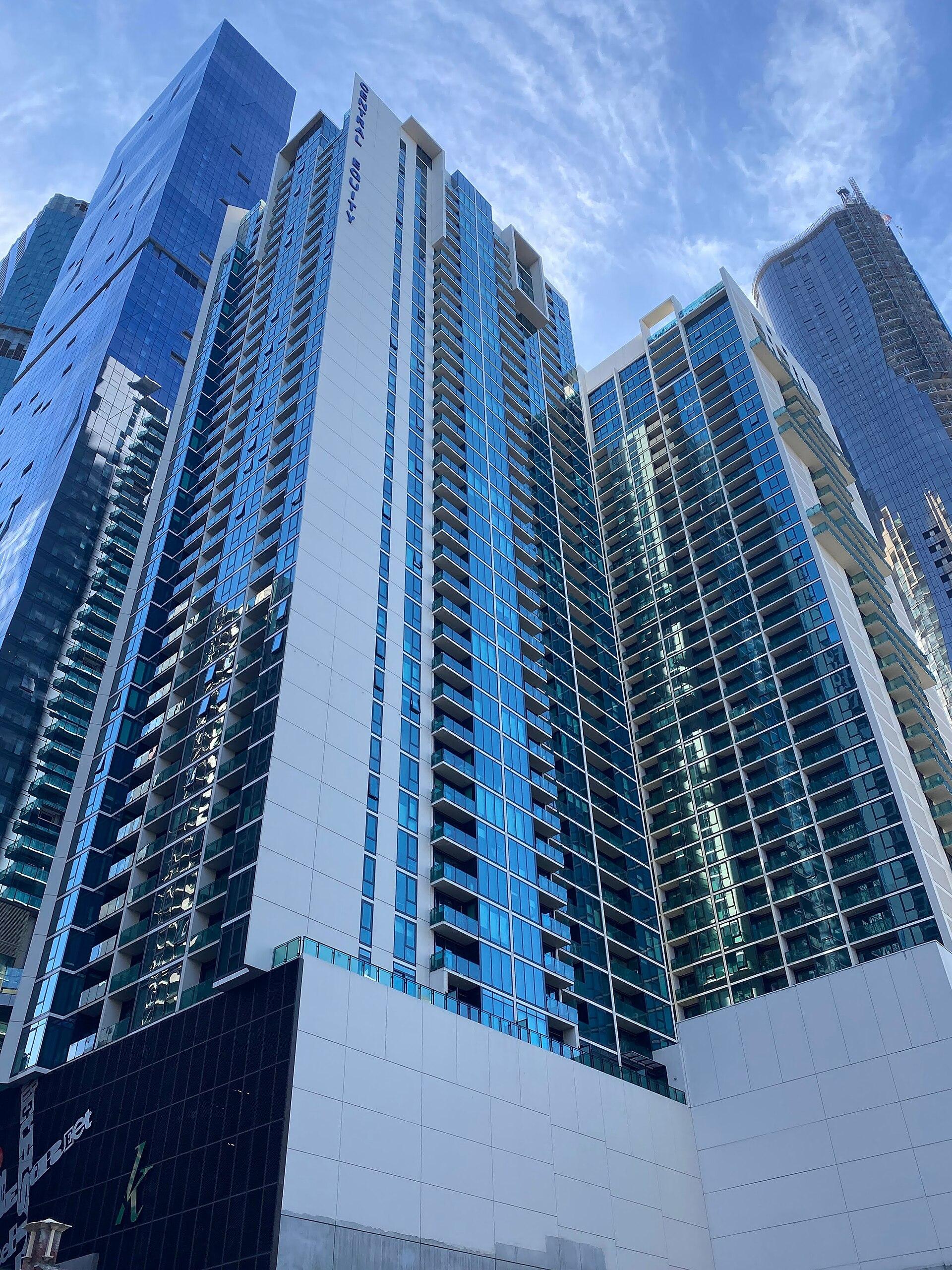
Class 2 or 3 with a rise in storeys of four or more, and effective height not more than 25 m. This is the mid-rise apartment and hotel rule that NCC 2019 added. The system must be throughout the building. The permitted standards are AS 2118.1, AS 2118.4 (only where that Part’s four-storey scope still fits), FPAA101D or FPAA101H, with residential-care buildings carved out of the two FPAA specs. Specification 17 and Specification 18 have to be read together.
Residential care and patient care. Class 3 used as residential care, Class 9a health-care buildings used as residential care, and Class 9c aged-care buildings are sprinkled throughout. Sleeping occupants who cannot be expected to evacuate themselves are the reason. These buildings do not get the cheap domestic-water shortcut that a four-storey walk-up apartment may use.
Large retail compartments. A Class 6 shop or shopping centre is sprinkled once a fire compartment crosses the Code’s floor-area or volume limits — in 2022 terms, the familiar 3,500 m² or 21,000 m³ figures. Below those sizes, a shop can still be forced into sprinklers by height, by being part of a taller mixed building, or by a large-isolated-building concession.
Enclosed car parks. A Class 7a compartment that is not open-deck and holds more than 40 vehicles is a sprinkler trigger. That number is for the compartment (and, in the mid-rise mixed-use rules, can be read for the building as a whole when you are trying to use FPAA101D or 101H). Open-deck car parks are treated differently because smoke and heat can vent.
Large isolated buildings and high-challenge storage. The Type of construction tables limit compartment size. Sprinklers, plus perimeter access, are how a warehouse or factory becomes a large isolated building under the C3D4 family. Separate E1 clauses also catch excessive hazard storage — combustible goods in volume, stored high — at lower area and volume thresholds than ordinary retail.
Assembly stages and early childhood. Large stages, rigging lofts and Class 9b early childhood centres have their own sprinkler or alternative-protection rules. Entertainment venues in New South Wales also pick up state-specific Part I provisions. Do not assume a school hall and a commercial theatre are the same clause.
Once a trigger applies, the default is throughout the building, not “only the storey that failed the test”. You may separate a sprinkled part from an unsprinkled part with construction that meets the Code and AS 2118, but that wall is a design, not a hope.
What changed for mid-rise apartments after NCC 2019?
Before NCC 2019, a new Class 2 or 3 building under 25 m effective height could often be designed without sprinklers if it met the rest of the DTS suite. The 25 m line was the main sprinkler cliff.
Two things shifted that. Fire services and the ABCB had a life-safety problem in four- to eight-storey residential buildings: brigade ladders do not own those floors the way they own a walk-up, and occupants still sleep there. And the Board would not have got a mid-rise mandate through if the only legal system was a full AS 2118.1 install with tanks and pumps. The 2019 package therefore did two jobs at once:
- it required sprinklers in new Class 2 and 3 buildings with a rise in storeys of four or more (and effective height of 25 m or less)
- it recognised FPAA101D and FPAA101H beside AS 2118.1 and AS 2118.4, and it attached concessions — longer travel, some FRL reductions, and in defined cases hydrant relief — so the cost case could close
The ABCB’s published cost-benefit work on a six-storey hotel test case is still the talking point the industry uses: FPAA101D came out slightly cheaper than the old unsprinklered DTS building once concessions were counted; FPAA101H was a few per cent dearer; AS 2118.1 / AS 2118.4 dearer again. Fire-engineering analysis put to the Board claimed a large drop in risk. Those figures are regulatory-impact figures, not a quote for your site.
NCC 2022 kept the policy and renumbered it into the E1D4 / Specification 17 / Specification 18 family. NCC 2025 is another edition, not a repeal. If someone tells you “mid-rise apartments do not need sprinklers any more”, they are reading an old BCA or a building that is only three storeys.
Details that still trip project teams:
- Rise in storeys is not the same as the number of floors a real-estate brochure counts. A basement can matter. So can a mezzanine.
- Effective height is measured to the floor of the top storey, with the Code’s own definition. A four-storey building on a steep site can cross 25 m.
- Mixed classification is not a pure Class 2 building. Ground-floor retail plus two basement car-park levels can lock you out of FPAA101D and lock you out of Specification 18 concessions. Fire and Rescue NSW has said so in published guidance.
- AS 2118.4 stops at four storeys. A six-storey apartment is not a Part 4 building.
Sole-occupancy unit heads, balconies and cupboards belong in fire sprinklers in Class 2 and 3 apartment buildings.
Which building classes are typically sprinkled?
People want a class-by-class list. The Code does not work as a poster, but this is the working map.
- Class 1a houses — Volume Two. Sprinklers are not a general DTS mandate. AS 2118.5 is the document if you sprinkle a house anyway.
- Class 2 apartments — four or more storeys, or effective height over 25 m, plus care and mixed-use overlays.
- Class 3 hotels, boarding houses, hostels — the same height and storey rules as Class 2, and always in residential-care use.
- Class 4 (a dwelling in a Class 5–9 building) — follows the host building once that building is sprinkled.
- Class 5 offices — no low-rise area trigger of their own. Height over 25 m, a large-isolated-building strategy, or being in a sprinkled mixed building are the usual reasons.
- Class 6 retail — large compartments, height, or mixed-use mid-rise rules.
- Class 7a car parks — enclosed parks over 40 vehicles; open-deck parks are a different conversation.
- Class 7b / 8 storage and factories — compartment limits, excessive hazard, large isolated buildings, height.
- Class 9a / 9c health and aged care — widely required throughout.
- Class 9b assembly — stages, early childhood, and some large venues; check the state appendix.
Class 5 to 9 buildings that are sprinkled are designed to AS 2118.1, not to a home or mid-rise residential specification, unless Specification 17 expressly lets a mixed building use Specification 18.
Do state variations change the answer?
Yes. The NCC is a model code. Each state and territory adopts it with an appendix. Victoria has its own residential-care and concession history. New South Wales writes extra entertainment-venue and fire-safety-schedule rules. Queensland’s QBCC licensing does not change the trigger, but it changes who may design the system. Other jurisdictions adopt on their own calendar.
Working habits that help:
- Ask which NCC edition the approval is under, not which edition is on the ABCB website this week.
- Read the state variation on Specification 17 before picking FPAA101D on a mixed-use or care building. Victoria rewrites parts of that clause.
- Do not copy a 2016 DTS fire strategy onto a 2022 mid-rise apartment and call the missing sprinklers a performance solution after the floor plates are fixed.
- A performance solution can add sprinklers where DTS does not require them, or arrange them differently where DTS does. That is a fire-engineering report, not a contractor’s email.
Once sprinklers are required, the other half of the cost conversation is what the Code gives back: NCC fire sprinkler concessions and what they are worth.