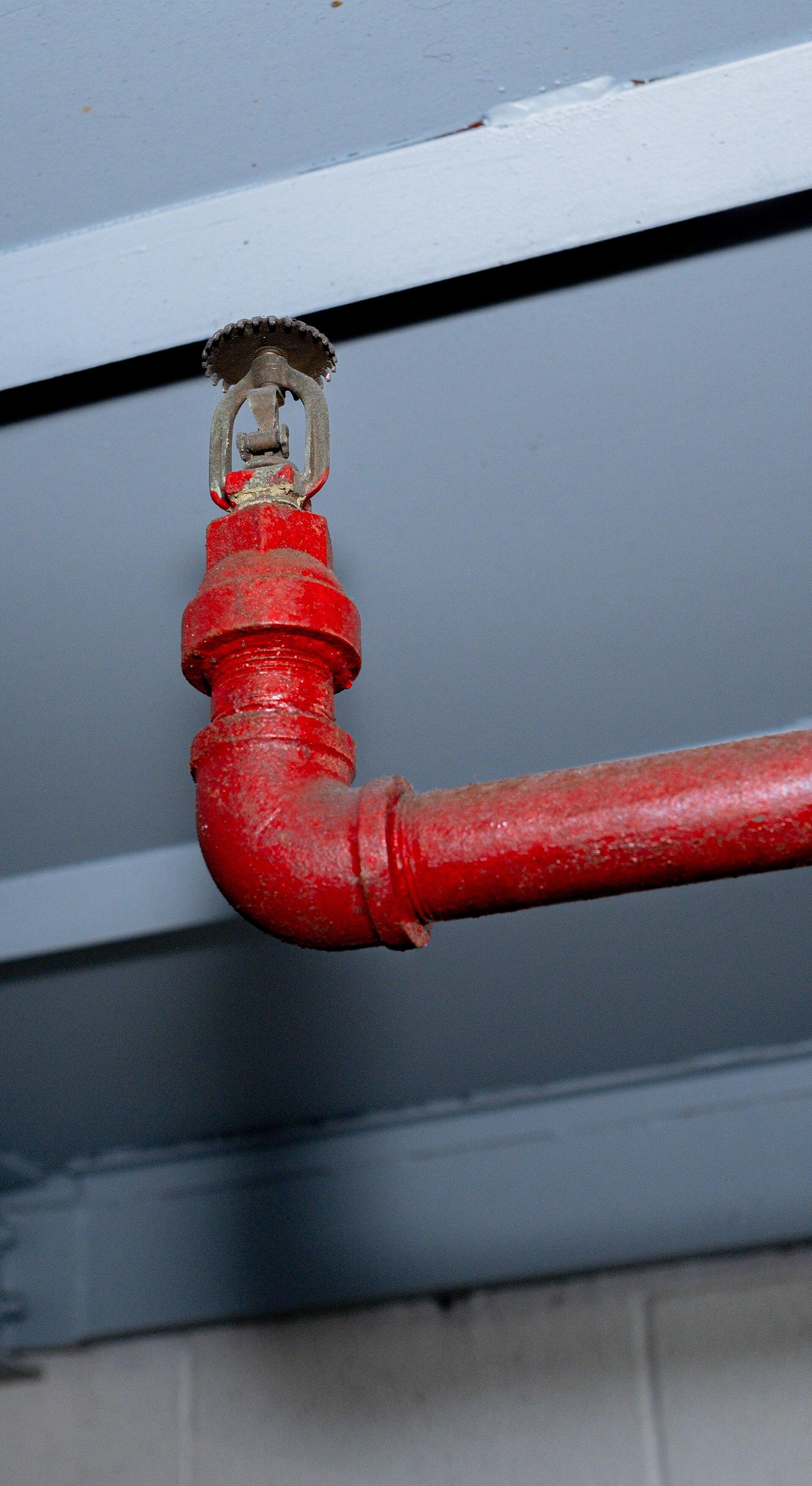
Sprinkler inspections rarely fail because a technician dislikes the building. They fail because the system in front of them is not the system on the certificate. Heads have been painted. Racking has crept into the spray. A valve that was shut for a leak in March is still shut in September. The weekly alarm test can look fine through all of that. The survey cannot.
This list is the defects Australian service reports actually repeat. It sits in the maintenance and inspection hub, next to AS 1851 maintenance and the isolation guide. It is not a complete catalogue of every possible fault. It is the set that, in practice, turns a yearly survey into a fail.
Why sprinkler inspections fail
AS 1851 surveys look at condition and at whether the installation still matches occupancy. A fail usually means the system cannot be honestly described as capable of performing as designed. That is a stronger statement than “needs a wipe”. It is also why occupancy certificates and the Annual Fire Safety Statement care about these reports.
The pattern is boring, which is why it keeps happening. Fitout painters treat heads as ceiling furniture. Warehouse teams treat the volume under the sprinklers as free air. Someone isolates a floor and does not write it down. Alarms are silenced because tests annoy the front desk. None of those people think they have impaired a fire system. The surveyor has to say so anyway.
A competent report will separate defects that stop the system working from defects that are housekeeping. If everything is labelled “attention required”, you cannot triage. If nothing is labelled a fail except a missing sticker, you should not relax. Read the language. Then look at the ceiling.
Painted, loaded and blocked sprinkler heads
Paint is the classic. A glass bulb or fusible element that has been painted, even lightly, may not operate at the temperature the head was listed for. Paint on the deflector changes the spray. Paint on a concealed-head cover plate can glue the plate on. Ceiling paint is not a sprinkler finish. If a tenancy has been “freshened”, assume someone sprayed the heads until a survey proves otherwise.
Do not scrape. Scraping damages bulbs, orifices and coatings. Painted heads are replaced. The cost belongs with the person who painted them, which on a commercial floor is usually the fitout, which on a lease is usually a conversation the building manager has to have before the next AFSS.
Loaded heads are the quieter cousin. Kitchen grease, laundry lint, warehouse dust, spray-booth overspray and construction powder all coat the same parts. A coated bulb is an untested bulb. In a commercial kitchen the answer is not a yearly dust; it is a head type and a cleaning regime that match the hazard, plus enough clearance that staff are not wiping deflectors with a cloth full of oil.
Mechanical damage belongs here too: bent deflectors from forklifts, missing rosettes, heads used as hanging points, and bagged heads left bagged after a fitout. A bag on a head is an isolation of that head. If the bag is still there on Monday, the floor is not protected.
Storage clearance and obstructed coverage
Ordinary sprinklers need a clear space below the deflector so the umbrella of water can form. In Australian design practice that clearance is commonly 500 millimetres for standard spray heads. Some storage sprinklers and high-piled layouts need more. The number for your building is on the design documents, not on a warehouse supervisor’s recollection of “about a foot”.
Storage that climbs into that space is a design change made with a pallet jack. It is also one of the most frequent survey fails in distribution buildings. The head may be clean and the pumps may start. The water will still hit a carton instead of a fire. For racking, flue spaces, in-rack heads and ESFR versus control-mode choices, the design conversation lives in warehouse high-piled storage sprinkler design. The maintenance conversation is simpler: if the surveyor cannot see the head, or cannot see a clear discharge, the inspection fails until the stock is moved.
Obstruction is not only storage. New bulkheads, feature timber, hanging signs, solar plant, cable trays and mezzanines all shadow sprinklers. A tenancy that adds a loft without telling the fire contractor has often created an unsprinklered occupancy under a sprinklered certificate. That is not a minor defect.
The fire-brigade booster connection — the FDC in imported language — fails inspections for the same family of reasons. Cars parked across it, landscaping grown over it, a locked cage with no key on the fire panel, faded signage, caps missing, inlets full of rubbish. A booster the brigade cannot use is a water-supply defect, even if the pumps in the basement are immaculate.
Closed valves, low pressure and disabled alarms
Closed valves are how sprinkler systems that “were fine” do nothing in a fire. Control valves, floor isolations, pump suction and discharge valves, tank outlets, town-main connections and test drains left cracked all count. Valves that should be open are meant to be secured that way — locked, strapped, monitored — and their position should match the block plan. A valve that is shut and untagged is worse than a valve that is shut and tagged, but both are impairments.
Low pressure is the next most common water-supply fail: town-main readings below the baseline, tanks low, a jockey that cannot keep up, a pump that no longer starts at the set pressure, a street valve the water authority closed for a main break. Pressure without a baseline is just a number. Pressure against last year’s report is evidence.
Disabled alarms are the defect managers underestimate because the building is quieter. Isolation at the fire indicator panel, a pressure switch left isolated after a weekly test, monitoring taken offline, a water motor gong jammed so the neighbours stop complaining — each one means the system may flow without anyone being told. A weekly test that is skipped “because monitoring keeps calling” is an argument for a better test procedure, not for silencing the path. See weekly, monthly and annual tests.
Undocumented isolations sit in this group. Someone drains a floor for a leak, or for a fitout, and does not put it on the impairment board or in the logbook. The next weekly test still trips the alarm valve for the rest of the building. The isolated floor is dark. That is how you get a pass on the valve room and a fail on the survey, or worse, a pass on both because nobody walked the floor.
Corrosion, missing spares and paperwork gaps
Corrosion is not only ugly pipe. External rust at hangers and grooves can become leaks. Internal corrosion and microbiologically influenced corrosion (MIC) show up as tubercles, pinhole leaks, black water and unexplained pressure loss. Stagnant oxygenated steel is a known environment for it. Treatment, investigation and, sometimes, pipe replacement are engineering decisions. Pretending a pinhole is “just a joint” is how you still have pinholes next year.
Spare heads are a small item that reports love, correctly. The cabinet should hold spare heads of each type and temperature rating on the system, with a wrench, and it should be accessible. A cabinet with three random heads and a dry paintbrush is not a spare-heads cabinet. In a fire, heads are not serviced; they are replaced. If the only 93-degree head in the building just opened, you need another one that matches.
Paperwork fails inspections too. No logbook on site. No as-installed drawings or block plan. Last year’s defects still open. A report that claims a yearly survey of areas the contractor could not enter. Baseline pressures that were never recorded. These are not clerking issues. They are how you cannot prove, to an occupancy-certificate regime or an insurer, that the system is the one you think it is.
What to do with a fail is not mysterious. Isolate only what must be isolated, and isolate it as a planned impairment. Replace painted and loaded heads; do not clean them into compliance. Move storage. Open and secure valves. Restore alarms. Fund the access the last survey skipped. Then read the next report as a building manager, not as someone waiting to file a green page. The service-report guide is the companion to this list.
Inspections fail because the building changed and the system was not allowed to catch up. The remedy is almost never a new standard. It is the unglamorous work AS 1851 already asked for.